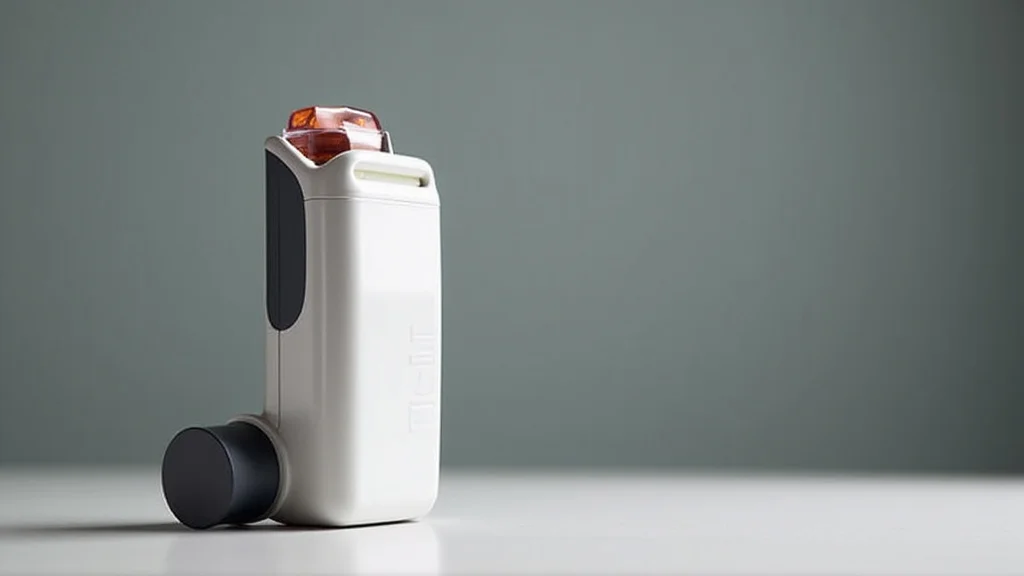
Some people find using an inhaler a bit tricky at first, especially when you are learning about hfa asthma inhalers. It is okay if it feels a little confusing. We will make it super simple, step by step.
You will learn exactly how to use your inhaler so you can breathe easier. Get ready to feel more confident with your asthma medicine.
Key Takeaways
- Learn what HFA asthma inhalers are and how they differ from older types.
- Discover the simple steps to use your HFA inhaler properly.
- Understand the importance of cleaning your inhaler for it to work best.
- Find out when and how often you should use your inhaler.
- Know what to do if your asthma symptoms get worse.
Understanding HFA Asthma Inhalers
HFA stands for hydrofluoroalkane. This is the propellant used in newer inhalers. It is a cleaner type of propellant compared to the older CFC (chlorofluorocarbon) propellants.
These older propellants were phased out because they were bad for the environment. HFA inhalers deliver your asthma medicine more effectively to your lungs. They are a common and safe way to manage asthma.
You might be wondering what makes them different from what you’ve used before. It’s mainly the propellant inside, which helps push the medicine out. This makes sure you get a good puff of your medication when you need it.
What Is an HFA Inhaler?
An HFA inhaler is a device that delivers medicine to your lungs to help control asthma. The medicine is a fine mist that you breathe in. This mist goes directly to your airways.
It works to open them up and reduce swelling. This helps you breathe more easily. It is different from pills you swallow.
The medicine gets to where it needs to be, fast. This is why inhalers are so important for people with asthma. They are designed to give you quick relief when you feel short of breath or wheezy.
Why HFA Propellants Are Better
The switch to HFA propellants was a good step for everyone. CFC propellants, used in older inhalers, had a negative impact on the Earth’s ozone layer. HFA propellants do not have this harmful effect.
They are much more eco-friendly. Besides being better for the planet, they can also be more efficient at delivering medication. This means more of your medicine might reach your lungs with each puff.
Doctors and pharmacists recommend HFA inhalers because they are safe and effective for treating asthma. They help manage your condition without harming the environment.
How HFA Inhalers Work
When you press down on the top of the inhaler, it releases a spray of medicine. This spray is made up of tiny droplets. These droplets are carried by the propellant.
They travel into your lungs when you inhale. The medicine then goes to work. It relaxes the muscles around your airways.
This makes it easier for air to pass through. It also helps to reduce inflammation in the airways. This can prevent asthma symptoms from happening in the first place.
The goal is to get the medicine deep into your lungs where it is most needed.
Steps for Using Your HFA Asthma Inhaler
Using your HFA asthma inhaler correctly is key to getting the most benefit from your medicine. It might seem like a lot of steps at first, but it is quite straightforward once you practice. We will go through each part slowly.
This will help you feel confident every time you use it. The main idea is to get a full, deep breath of the medicine. Following these steps ensures that happens.
Prepare Your Inhaler
First, take off the cap from the mouthpiece. This cap keeps the mouthpiece clean. It is important to keep it on when you are not using the inhaler.
Next, shake the inhaler well. You should shake it for about 5 to 10 seconds. This mixes the medicine with the propellant.
It ensures you get the right dose every time. If your inhaler is new, or if you haven’t used it for a while, you might need to “prime” it. Priming just means spraying it a few times into the air.
This gets the medicine flowing correctly. Always check the instructions that came with your specific inhaler. They will tell you how to prime it.
This step is often overlooked, but it is very important.
Inhale the Medicine
Now, breathe out slowly and completely. Try to empty your lungs as much as you can. Then, put the mouthpiece between your lips.
Close your lips tightly around it. This creates a good seal. As you begin to breathe in slowly and deeply through your mouth, press down on the top of the inhaler.
You need to press it just once. Keep breathing in slowly and deeply. Try to hold your breath for about 10 seconds.
This allows the medicine to settle into your lungs. If you cannot hold your breath for 10 seconds, hold it for as long as you comfortably can. After holding your breath, breathe out slowly.
After Using Your Inhaler
Once you have finished breathing out, remove the inhaler from your mouth. Put the cap back on the mouthpiece securely. This protects it from dirt and dust.
If your doctor told you to use more than one puff, wait about 1 minute before taking the second puff. Shake the inhaler again before taking the second puff. Then, repeat the same steps for inhaling the medicine.
Rinsing your mouth with water after using your inhaler can be helpful, especially if your inhaler contains a steroid medicine. This helps prevent a sore throat or thrush in your mouth. Just swish some water around and spit it out.
Do not swallow the water. These simple steps help ensure you get the best possible treatment.
Example Scenario: Using Your Rescue Inhaler
Imagine you are starting to feel a little wheezy. Your chest feels tight, and it’s becoming harder to catch your breath. You know it’s time to use your quick-relief inhaler.
First, you find your HFA asthma inhaler and remove the cap. You give it a good shake for about 10 seconds to mix the medicine. Then, you breathe out as much as you can.
You place the mouthpiece between your lips, making sure it’s sealed. As you start to inhale slowly, you press the top of the inhaler once. You continue to breathe in deeply and hold your breath for a count of ten.
Finally, you breathe out. You feel a little better already. If needed, you’ll wait a minute and repeat the process.
Cleaning and Maintaining Your Inhaler
Keeping your inhaler clean is not just about how it looks. It is very important for making sure the medicine can get out properly. A clogged inhaler can mean you are not getting enough of your medicine.
This can make your asthma symptoms worse. We will show you how easy it is to keep your inhaler in good shape. A clean inhaler works better and helps you feel better.
Why Cleaning Is Important
Over time, small amounts of medicine can build up inside the mouthpiece. This residue can dry and block the opening. If the opening is blocked, the spray of medicine might not come out as a fine mist.
It could come out in larger droplets. This means less medicine gets into your lungs where it needs to go. Cleaning removes this build-up.
It ensures that the full dose of medicine is delivered effectively with each puff. Think of it like keeping a garden hose free of kinks. You want a clear path for the water to flow smoothly.
Your inhaler needs that clear path for the medicine.
How to Clean Your HFA Inhaler
The way you clean your inhaler depends on the type. Most HFA inhalers have a separate plastic actuator (the part you press). This part can usually be washed.
First, remove the metal canister from the plastic actuator. Do not put the metal canister in water. Keep it dry.
Then, rinse the plastic actuator and the cap under warm running water. Gently rub the outside and inside of the mouthpiece. Make sure all visible medicine residue is gone.
You can use a soft cloth or cotton swab to help remove stubborn residue. After rinsing, let the plastic actuator and cap air dry completely. This is very important.
Do not try to speed up drying with a cloth or paper towel, as this can leave lint behind. Once completely dry, reassemble the inhaler by putting the metal canister back into the plastic actuator. Make sure it fits snugly.
Frequency of Cleaning
It is a good idea to clean the plastic actuator and cap at least once a week. If you use your inhaler very often, you might want to clean it more frequently. Some people find it helpful to clean it every few days.
Always check the manufacturer’s instructions for your specific inhaler model. They will have the most accurate guidance. Regular cleaning ensures your inhaler is always ready to deliver your medicine effectively.
A consistent cleaning routine will become a simple habit. It is a small task that has a big impact on your health.
Example of Cleaning Mistake
Sarah used her inhaler for a few weeks without cleaning it. She noticed that when she used it, it felt like less medicine was coming out. Sometimes it even made a strange whistling sound.
She thought maybe the inhaler was running out of medicine. However, when she took it to the pharmacy, the pharmacist showed her the build-up of dried medicine inside the mouthpiece. They cleaned it for her, and it worked perfectly again.
Sarah learned that regular cleaning is a must, not just an option.
When to Use Your HFA Asthma Inhaler
Knowing when to use your inhaler is just as important as knowing how to use it. There are typically two main types of inhalers: a quick-relief inhaler and a long-term control inhaler. Your doctor will tell you which one is for what purpose.
Using the right inhaler at the right time will help you manage your asthma symptoms best. Let’s look at when you should reach for your inhaler.
Quick-Relief Inhalers
Your quick-relief inhaler, often called a rescue inhaler, is for when you have sudden asthma symptoms. This includes wheezing, coughing, chest tightness, or shortness of breath. These symptoms can happen when your airways narrow quickly.
You might feel them when you are exercising, exposed to a trigger like smoke, or for no clear reason. If you feel any of these symptoms, use your quick-relief inhaler right away. The medicine in this inhaler works fast to open up your airways.
It can help you feel better within minutes. Do not use your rescue inhaler more often than your doctor tells you. Using it too much can be a sign that your asthma is not well-controlled.
Long-Term Control Inhalers
Long-term control inhalers are different. They are usually taken every day, even when you are not having symptoms. These inhalers contain medicines, often corticosteroids, that reduce swelling and inflammation in your airways.
This makes your airways less sensitive to triggers. By using your controller inhaler regularly, you can prevent asthma symptoms from happening in the first place. They help you live a more normal life without constant worry about your breathing.
It’s like putting out small fires before they become big ones. These medicines build up their effect over time, so it’s important to use them as prescribed.
Using Inhalers With a Spacer
Sometimes, especially for children or people who have trouble coordinating breathing and pressing the inhaler, a spacer is recommended. A spacer is a tube that attaches to your inhaler. It holds the medicine mist.
You breathe the medicine from the spacer. This makes it easier to get the medicine into your lungs. It also helps reduce medicine landing in your mouth or throat.
If you use a spacer, you still follow the same steps of shaking the inhaler and pressing it. Then, you place the mouthpiece of the spacer in your mouth and breathe in slowly and deeply. Hold your breath for 10 seconds, then breathe out.
Spacers also need to be cleaned regularly.
Sample Usage Scenarios
Scenario 1: You are playing outside with friends and start to feel a bit breathless and wheezy. You stop playing and reach for your quick-relief inhaler. You follow the steps: shake, breathe out, seal lips, breathe in while pressing, hold breath, breathe out.
Within a few minutes, you feel your breathing return to normal, and you can rejoin your friends.
Scenario 2: It’s morning, and you wake up feeling fine. You take your daily long-term control inhaler as prescribed by your doctor. You shake it, breathe out, seal your lips, breathe in while pressing, hold your breath, and breathe out.
You do this every morning to keep your airways calm and prevent asthma symptoms throughout the day.
Statistics on Inhaler Use
Research shows that proper inhaler technique can significantly improve asthma control. Studies suggest that up to 50% of patients may not use their inhalers correctly, leading to less effective treatment. When patients are properly trained on their inhaler technique, their symptom control often improves dramatically.
| Device | Proper Use Success Rate | Medication Delivery Efficiency |
|---|---|---|
| HFA Inhaler (Correct Technique) | High | High |
| HFA Inhaler (Incorrect Technique) | Low | Low |
Common Myths Debunked
Myth 1: HFA inhalers are addictive.
This is not true. The medicines in HFA inhalers, like bronchodilators, work by relaxing the muscles around your airways. They help you breathe better when you have asthma symptoms.
They do not cause addiction like drugs do. Your body does not become dependent on them in the same way. However, if you find yourself needing to use your rescue inhaler more and more, it means your asthma is not well-controlled.
You should see your doctor to adjust your treatment plan.
Myth 2: You don’t need to clean your inhaler if it looks clean.
As we discussed, even if your inhaler looks clean on the outside, there can be a build-up of dried medicine inside the mouthpiece. This build-up can block the nozzle, preventing the medicine from spraying correctly. Regular cleaning ensures that the full dose of medication is delivered to your lungs.
Skipping cleaning can lead to less effective treatment and potentially worse asthma control.
Myth 3: If you feel fine, you can stop using your long-term control inhaler.
This is a common mistake that can lead to asthma worsening. Long-term control inhalers, like those with corticosteroids, work over time to reduce inflammation in your airways. They prevent symptoms from occurring.
If you stop using them when you feel good, the inflammation can return without you noticing. This can make your airways more sensitive to triggers, leading to a sudden asthma attack. It is very important to use your controller inhaler every day as prescribed, even when you have no symptoms.
Myth 4: All inhalers are the same.
There are different types of inhalers, and they work in different ways. Some are for quick relief of symptoms, while others are for long-term control. The medicines inside them are also different.
For example, a rescue inhaler might contain albuterol, which works quickly to open airways. A controller inhaler might contain a corticosteroid, which reduces inflammation over time. It is vital to use the correct inhaler for the correct purpose as directed by your doctor.
Frequently Asked Questions
Question: How do I know if my HFA inhaler is empty?
Answer: Many HFA inhalers do not have a dose counter. The best way to tell if it might be running out is to count your puffs. Keep track of how many puffs you use from when you first get it.
Also, the spray may become weaker or feel different when it’s nearly empty.
Question: Can I share my HFA asthma inhaler with someone else?
Answer: No, you should never share your inhaler. Inhalers are prescribed for your specific needs and condition. Sharing an inhaler can spread germs and infections, and you may not get the right dose of medicine for your own asthma.
Question: What should I do if I miss a dose of my long-term control inhaler?
Answer: If you miss a dose of your controller inhaler, take it as soon as you remember. However, if it is almost time for your next scheduled dose, skip the missed dose and go back to your regular dosing schedule. Do not take a double dose.
Question: Do I need a prescription for an HFA asthma inhaler?
Answer: Yes, most HFA asthma inhalers are prescription medications. Your doctor needs to assess your asthma and determine the right type of inhaler and medicine for you. Always get your inhaler from a pharmacy with a valid prescription.
Question: What if my HFA inhaler doesn’t seem to be working?
Answer: If you use your quick-relief inhaler and your symptoms do not improve, or if your symptoms get worse, seek medical attention right away. This could mean your asthma is severe. If your controller inhaler doesn’t seem to be helping over time, talk to your doctor.
They may need to change your medication or adjust your treatment plan.
Final Thoughts
Using your hfa asthma inhalers correctly is straightforward with simple steps. You learned how to prepare, use, and clean them. Knowing when to use your quick-relief versus control inhaler is key.
Following these easy guidelines helps your medicine work best. This means better breathing and more freedom for you. Keep up the good work with your inhaler care.