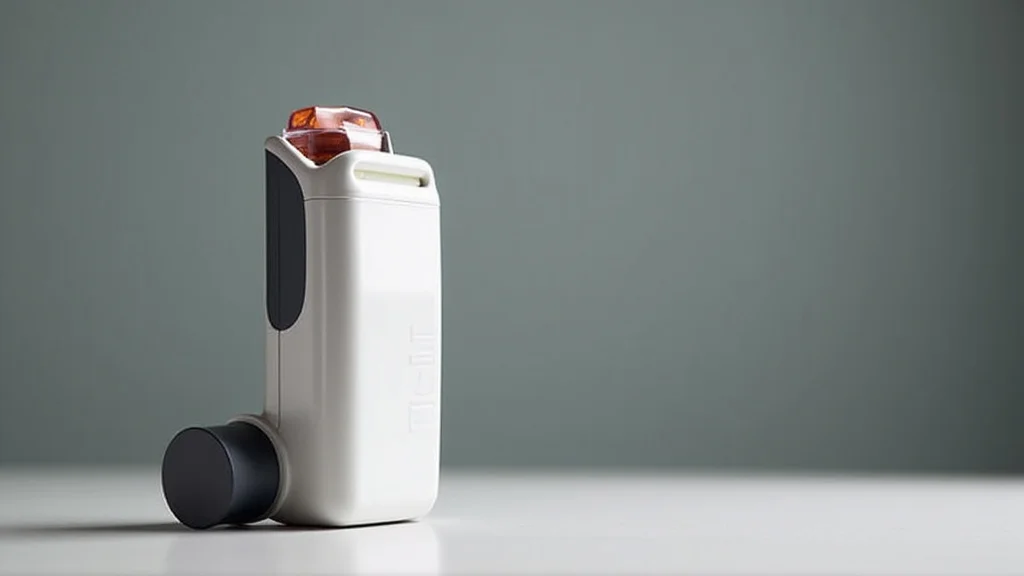
Learning to use inhalers for asthma can seem a bit tricky at first. Many people find it confusing to know if they are doing it right. It’s common to worry about getting the medicine to your lungs properly.
But don’t worry, this guide will show you the simple steps to use your inhaler correctly every time. We will break it all down so you can feel confident.
Key Takeaways
- Understand the different types of asthma inhalers.
- Learn the correct steps for using a metered-dose inhaler (MDI).
- Discover how to use a dry powder inhaler (DPI).
- Know when and how to use a spacer with your inhaler.
- Recognize common mistakes and how to avoid them.
- Find out how to clean and store your inhalers properly.
Understanding Asthma Inhalers
How Asthma Inhalers Work
Asthma inhalers are special devices that deliver medicine directly to your lungs. This is important because it helps the medicine start working very fast to relieve asthma symptoms. Unlike pills that go through your whole body, inhalers put the medicine right where it is needed.
This means you can breathe better quickly when you have an asthma attack or feel symptoms coming on.
The medicine in inhalers usually works in one of two main ways. Some medicines are called bronchodilators. They help to open up the airways in your lungs that have become tight and narrow.
Others are called anti-inflammatory medicines. These help to reduce swelling and irritation in your airways, which can prevent asthma symptoms from happening in the first place.
Using your inhaler the right way is very important. If you do not use it correctly, the medicine might not get into your lungs as well as it should. This means it might not help your asthma as much as it could.
This guide will help you learn the best ways to use different kinds of inhalers.
Types of Asthma Inhalers
There are several common types of inhalers that people use for asthma. The most well-known is the metered-dose inhaler, or MDI. These are often the small, colorful canisters that many people picture when they think of asthma inhalers.
They work by releasing a puff of medicine each time you press the canister.
Another type is the dry powder inhaler, or DPI. These inhalers do not use a propellant like MDIs. Instead, they deliver the medicine as a fine powder that you breathe in.
They come in various designs, like Diskus or Turbuhaler, and often have a dose counter that shows you how many puffs are left.
Some people may also use nebulizers. While not technically handheld inhalers, nebulizers turn liquid medicine into a fine mist. You breathe this mist in through a mask or mouthpiece over several minutes.
They are often used for young children or people who have severe breathing problems and cannot use a regular inhaler well.
Each type of inhaler has its own way of being used. It is really helpful to know which one you have and to learn the specific steps for it. Your doctor or pharmacist can show you the best way to use your particular inhaler.
They can also make sure you are using it correctly.
How Bronchodilators Work
Bronchodilators are a key part of asthma treatment for many people. They are often called “rescue inhalers” because they provide quick relief. When you breathe in a bronchodilator, it goes to the muscles around your airways.
These muscles can tighten up when you have asthma, making it hard to breathe.
The medicine in the bronchodilator tells these muscles to relax. As the muscles relax, the airways get wider. This makes it easier for air to flow in and out of your lungs.
This relief usually happens very fast, often within minutes. It helps to ease symptoms like wheezing, coughing, and shortness of breath.
There are two main types of bronchodilators: short-acting and long-acting. Short-acting bronchodilators are for quick relief of symptoms when they occur. Long-acting bronchodilators are sometimes used in combination with other medicines to help control asthma over time, but they are not for immediate relief of an asthma attack.
The effectiveness of bronchodilators relies on the medicine reaching the airway muscles. Proper inhaler technique ensures that the dose is delivered efficiently. If the inhaler is not used correctly, the medicine may settle in the mouth or throat instead of reaching the lungs.
This reduces its ability to open up the airways and provide the needed relief.
How Anti-Inflammatory Medicines Work
Anti-inflammatory medicines, often called corticosteroids, are different from bronchodilators. Instead of providing quick relief, they work over time to reduce swelling and irritation in the airways. Asthma is a condition where the airways become inflamed, making them sensitive and more likely to react to triggers.
When you use an anti-inflammatory inhaler regularly, it helps to calm down this inflammation. This makes your airways less likely to become tight and narrow. It can also reduce mucus production, which can also block airways.
The goal is to prevent asthma symptoms from happening in the first place.
These medicines need to be taken every day, even when you feel good. They are not for sudden asthma attacks. It can take a few days or even a couple of weeks to feel the full benefits of these medicines.
They are often called “controller” or “maintenance” inhalers.
Because they are used for long-term control, consistent and correct use is vital. If a person misses doses or uses the inhaler incorrectly, the inflammation might not be controlled well. This can lead to more frequent asthma symptoms and potentially more serious attacks.
It is important to follow your doctor’s instructions for using these inhalers regularly.
Using Your Metered-Dose Inhaler (MDI)
The metered-dose inhaler (MDI) is perhaps the most common type of inhaler for asthma. It is a small, portable device that dispenses a measured dose of medicine with each actuation. Using an MDI correctly is key to getting the full benefit of the medication and effectively managing asthma symptoms.
Many people who use MDIs do not use them in the most effective way. This can happen because it requires a specific coordination of pressing the canister and breathing in. Without proper technique, a significant amount of the medicine can be wasted, or it may not reach the lungs where it is needed most.
This section will guide you through the steps for using an MDI properly.
Steps for Using an MDI
Using an MDI involves a few simple but important steps. First, always check your inhaler to make sure it is working and has medicine in it. If it’s a new inhaler or one that hasn’t been used in a while, you’ll need to “prime” it.
This usually means shaking it well and spraying a few puffs into the air, away from your face. Your inhaler’s instructions will tell you how many times to do this.
Next, shake the inhaler well for about 5 to 10 seconds. This mixes the medicine with the propellant. Then, take off the cap and breathe out slowly and completely.
Try to get as much air out of your lungs as you can. This prepares your lungs to take in the full dose of medicine.
Now, place the mouthpiece of the inhaler into your mouth. Seal your lips tightly around it. As you start to breathe in slowly and deeply through your mouth, press down on the top of the medicine canister.
Breathe in for about 3 to 5 seconds. Keep breathing in as steadily as you can.
After you have breathed in the medicine, hold your breath for about 10 seconds. This allows the medicine to settle into your lungs. Then, slowly breathe out.
If you need to take another puff, wait about 1 minute before repeating the steps. This gives the first dose time to start working and prevents you from taking too much medicine too quickly.
Finally, put the cap back on the inhaler after you are finished. If you are using a corticosteroid inhaler, it is a good idea to rinse your mouth with water and spit it out afterward. This helps to prevent a fungal infection in your mouth, which can be a side effect of these medicines.
Common MDI Mistakes and How to Avoid Them
One very common mistake people make with MDIs is not shaking the inhaler enough. If the medicine is not mixed properly, you might get too much propellant and not enough medicine, or vice versa. Always shake it well for at least 5 to 10 seconds.
Another mistake is breathing in too quickly. You need to breathe in slowly and deeply. If you inhale too fast, the medicine might just hit the back of your throat and not go deep into your lungs.
Try to time your inhalation with the spray of the medicine. This is where a spacer can be very helpful, which we will discuss later.
Forgetting to breathe out fully before using the inhaler is also a common error. You want to make sure your lungs are as empty as possible so you can take in the maximum amount of medicine. Always exhale completely before you press the canister.
Holding your breath after inhaling is crucial. If you don’t hold your breath for about 10 seconds, the medicine won’t have enough time to deposit in your lungs. It will just be breathed out again too soon.
Make sure you count slowly to 10.
Lastly, many people do not rinse their mouths after using steroid inhalers. This can lead to thrush, a yeast infection in the mouth. Always rinse and spit after using a corticosteroid MDI.
If you find yourself making these mistakes, try practicing the steps slowly in front of a mirror or with a healthcare provider.
Using an MDI with a Spacer
A spacer is a device that attaches to the end of an MDI. It is often a plastic tube with a mouthpiece or mask on one end and a place to attach the inhaler on the other. Spacers are highly recommended for many people, especially children and older adults, or anyone who has trouble coordinating pressing the inhaler and breathing in.
How does a spacer help? When you press the MDI canister, it sprays the medicine into the spacer chamber. This creates a cloud of medicine droplets.
Then, you can breathe in from the spacer at your own pace. The spacer slows down the medicine spray, making it easier to inhale deeply and preventing much of the medicine from hitting the back of your throat.
Using a spacer involves a few steps. First, attach the MDI to the end of the spacer. Shake both the MDI and the spacer well.
Breathe out fully. Place the mouthpiece of the spacer in your mouth and seal your lips around it. Then, press the MDI canister once to release one puff of medicine into the spacer.
Breathe in slowly and deeply from the spacer for 3 to 5 seconds. Then, remove the spacer from your mouth and hold your breath for 10 seconds. If you need a second puff, wait about 1 minute, then repeat the process with the MDI and spacer.
After using the spacer, clean it according to the manufacturer’s instructions, usually by washing it with mild soap and water and letting it air dry.
Using a spacer can significantly increase the amount of medicine that reaches your lungs. This means your asthma medication can be more effective. It also reduces the amount of medicine that deposits in your mouth and throat, lowering the risk of side effects like thrush.
Always check with your doctor or pharmacist if a spacer is right for you and how to use it properly.
Using Your Dry Powder Inhaler (DPI)
Dry powder inhalers (DPIs) are another common type of inhaler used for asthma. Unlike MDIs that use a propellant, DPIs deliver medicine as a dry powder. They often require a quick, forceful inhalation to draw the powder into the lungs.
DPIs come in various designs, and each might have slightly different instructions for loading and using them. However, the general principle of inhaling the powder is the same. It is important to follow the specific instructions for your particular DPI to ensure you are getting your full dose of medicine.
Steps for Using a DPI
First, always check your DPI to make sure it is ready to use. Some DPIs require you to load a dose by moving a lever or turning a wheel. Others are pre-loaded with doses.
Make sure you know how many doses are left if your inhaler has a dose counter.
Once the dose is loaded, hold the inhaler upright. Breathe out slowly and completely, away from the inhaler. This is important so you don’t blow the powder out of the device.
Place the mouthpiece of the DPI into your mouth. Seal your lips around it to create a good seal.
Now, inhale quickly and deeply through your mouth. You need to breathe in hard and fast to pull the powder out of the inhaler and into your lungs. It might feel different from using an MDI.
You may or may not taste or feel the medicine. This is normal.
After inhaling, remove the inhaler from your mouth and hold your breath for about 10 seconds, or as long as you comfortably can. This helps the medicine to settle into your lungs. Then, exhale slowly.
If your DPI requires loading a new dose, you can do so after you have finished using it.
If you need a second dose, wait about 1 minute and repeat the entire process. Remember to close the device if it has a cover, and store it in a dry place. Like MDIs, if you are using a corticosteroid DPI, you should rinse your mouth after use to prevent thrush.
Common DPI Mistakes and How to Avoid Them
A very common mistake with DPIs is breathing out into the inhaler. This can cause the medicine powder to be blown out of the device before you can inhale it. Always breathe out away from the inhaler.
Another mistake is inhaling too weakly. DPIs require a strong, fast inhalation to work properly. If you don’t inhale forcefully enough, you might not get the full dose of medicine.
Practice taking a quick, deep breath. If you are unsure, ask your doctor or nurse to check your technique.
Some people forget to load the dose before each use, especially with DPIs that require this step. This means you won’t get any medicine. Always ensure the dose is loaded correctly according to the device’s instructions.
Not holding your breath after inhalation is also a problem. This prevents the medicine from being absorbed by your lungs. Aim to hold your breath for at least 10 seconds.
This allows maximum absorption.
Finally, improper storage can affect DPIs. Many are sensitive to moisture. Always keep them in a dry place and follow the manufacturer’s storage guidelines.
If you struggle with any of these, seek guidance from a healthcare professional.
Examples of DPI Devices
There are several popular types of DPIs on the market, each with its own design and method of use. For example, the Diskus inhaler is a flat, round device that you slide open to load a dose. It has a dose counter on the side.
The Turbuhaler is another common DPI. It looks like a small pen or cylinder. To load a dose, you twist the base of the inhaler.
It also typically has a dose indicator. You can often feel or hear a click when a dose is loaded.
Other DPIs include the Ellipta inhaler, which is a slide-and-breathe device, and the RespiClick, which uses a lever mechanism. Each of these devices is designed to provide a specific amount of medicine powder. The key is to familiarize yourself with the specific device you have been prescribed and to practice its use.
For instance, when using an Ellipta inhaler, you slide the cover open to reveal the mouthpiece and load the dose. With a RespiClick, you press down on a lever until you hear a click. For all DPIs, the inhalation technique remains critical: a fast, deep breath.
It’s always best to get a demonstration from your doctor or pharmacist.
Maintaining Your Asthma Inhalers
Proper care and maintenance of your asthma inhalers are just as important as using them correctly. Keeping your inhalers clean and in good working order ensures they deliver the medicine effectively and safely. It also helps to prevent them from getting blocked or damaged.
Different types of inhalers have different cleaning needs. For example, MDIs need their mouthpieces cleaned regularly, while DPIs have different components that might require attention. Following the manufacturer’s instructions for cleaning and storage will help your inhalers last longer and work better.
Cleaning Your Inhalers
For metered-dose inhalers (MDIs), it’s important to clean the plastic actuator or mouthpiece regularly. This is the part you put in your mouth. At least once a week, remove the metal canister and rinse the plastic mouthpiece under warm running water.
Make sure to remove any visible signs of medicine buildup.
After rinsing, let the mouthpiece air dry completely before putting the canister back in. You can also wipe the outside of the canister and the mouthpiece with a damp cloth. Never submerge the metal canister in water or try to clean it.
If your MDI comes with a spacer, you should also clean the spacer regularly according to its specific instructions.
Dry powder inhalers (DPIs) generally require less frequent cleaning. For most DPIs, you should wipe the mouthpiece with a dry cloth. Never use water to clean a DPI unless the manufacturer specifically says it’s okay, and even then, ensure it dries completely.
Moisture can damage the powder medicine inside.
Some DPIs have removable parts that can be cleaned. Always consult the patient information leaflet that came with your inhaler for the most accurate cleaning instructions. A clean inhaler ensures that the medicine can flow freely and isn’t blocked by old residue.
Storing Your Inhalers
Proper storage of your inhalers is vital for their effectiveness and longevity. Most inhalers should be stored at room temperature. This means avoiding extreme heat or cold.
Do not leave your inhaler in a hot car or in direct sunlight for extended periods. Extreme temperatures can affect the medicine and the propellant in MDIs, making them less effective. For DPIs, heat can also degrade the medicine, and moisture is a major concern.
Keep your inhalers in a dry place. Damp environments can lead to moisture buildup, which can clog the device or damage the powder in DPIs. A bathroom cabinet might seem convenient, but it can often be too humid.
Always keep the cap on your inhaler when you are not using it. The cap protects the mouthpiece from dirt and dust. If the mouthpiece gets dirty, it can affect how you inhale the medicine or introduce germs.
Make sure you know where your inhalers are. It’s a good idea to keep your rescue inhaler easily accessible at all times, in case of an emergency. Don’t store it too deep in a bag or drawer where you can’t get to it quickly.
When to Replace Your Inhaler
Inhalers don’t last forever. They have a shelf life, and even if they look okay, the medicine inside can become less effective over time. It’s important to know when to replace them.
For MDIs, check the expiration date on the canister. Once it expires, you should get a new one. Also, if the canister seems empty or the spray pattern changes, it might be time for a replacement, even if it’s before the expiration date.
Some MDIs have a certain number of actuations they can deliver before they are empty, so pay attention to dose counters if available.
DPIs also have expiration dates. Always check these dates and replace the inhaler as recommended. If a DPI has a dose counter, once it reaches zero, the inhaler is empty and should be replaced.
Even if the counter hasn’t reached zero, some devices are designed to stop working after a certain period or number of uses.
If your inhaler is damaged, looks different, or the medicine doesn’t seem to be working as well as it used to, it’s best to talk to your doctor or pharmacist. They can advise you on whether it’s time for a replacement. Using an expired or faulty inhaler can lead to poorly controlled asthma.
Common Myths Debunked
Myth 1: Inhalers are only for emergencies or severe asthma attacks.
Reality: While rescue inhalers are crucial for emergencies, many inhalers are used daily to prevent symptoms. Controller inhalers, like corticosteroids, are taken regularly to reduce airway inflammation and prevent attacks from happening. Using them consistently helps maintain better lung function and reduces the need for rescue medication.
Myth 2: If I feel fine, I don’t need to use my controller inhaler.
Reality: Controller inhalers work by reducing the underlying inflammation in your airways. Asthma is a chronic condition, and even when you feel symptom-free, inflammation can still be present. Stopping your controller medication can allow this inflammation to build up again, making you more susceptible to asthma attacks.
Regular use is key to long-term asthma control.
Myth 3: Using an inhaler will make me dependent on it.
Reality: Asthma inhalers, especially rescue inhalers, are designed to be used when needed. They work quickly to open airways and relieve symptoms. They do not cause addiction or physical dependence in the way some other medications might.
They are a vital tool to help you manage your breathing effectively and safely. Dependence is not a concern with properly prescribed asthma inhalers.
Myth 4: All inhalers are used the same way.
Reality: This is not true. As we’ve discussed, there are different types of inhalers, such as MDIs and DPIs, and they require different techniques. Even within these categories, specific devices may have unique steps.
Using the wrong technique for your inhaler type can mean you don’t get the full dose of medicine, making it less effective. Always learn the specific method for your prescribed inhaler.
Myth 5: Inhalers can cause serious side effects.
Reality: While all medications can have side effects, asthma inhalers are generally very safe when used as prescribed. For inhaled corticosteroids, common side effects like thrush or hoarseness can often be managed by rinsing the mouth after use. Systemic side effects are rare with inhaled corticosteroids because the medicine goes directly to the lungs.
Rescue inhalers may cause temporary side effects like shakiness or a faster heart rate, which usually go away quickly.
Frequently Asked Questions
Question: How do I know if my inhaler is empty
Answer: For metered-dose inhalers (MDIs), they often feel lighter when they are running low and may spray less medicine. Some MDIs have dose counters. For dry powder inhalers (DPIs), many have dose counters that show you how many puffs are left.
Once the counter reaches zero, the inhaler is empty. Always check your specific inhaler type for its indicators.
Question: Can I share my inhaler with someone else
Answer: No, you should never share your inhaler. Inhalers are prescribed for individual use. Sharing an inhaler can spread germs and infections, and the medication might not be appropriate for another person’s specific asthma needs or severity.
Question: What should I do if I use my rescue inhaler and still can’t breathe
Answer: If your rescue inhaler doesn’t provide relief, or if you need to use it more often than usual, this is a sign your asthma is not well-controlled. You should seek immediate medical attention. Contact your doctor or go to the nearest emergency room.
This could be a sign of a severe asthma attack.
Question: How often should I clean my inhaler
Answer: For metered-dose inhalers (MDIs), it’s recommended to clean the mouthpiece at least once a week. Dry powder inhalers (DPIs) generally do not require washing with water; wiping with a dry cloth is usually sufficient. Always refer to the manufacturer’s instructions for your specific inhaler.
Question: Is it okay to use an expired inhaler
Answer: No, it is not safe to use an expired inhaler. The medicine may have lost its potency and may not work as effectively to control your asthma. Always check the expiration date on your inhaler and replace it before it expires.
Wrap Up
Using inhalers for asthma correctly is a skill that gets easier with practice. Knowing the steps for your specific inhaler type, whether it’s an MDI or DPI, is key to getting the medicine to your lungs. Remember to clean and store them properly too.
This helps your inhalers work their best for you every time you need them.